TOTALLY AWESOME HISTORY
  • Home
  • Articles
    • Blog
  • Videos
    • Documentaries
    • The Dark Side
    • Other Stuff
  • Other works
  • About TAH
  • Store
  • Contact
  • Home
  • Articles
    • Blog
  • Videos
    • Documentaries
    • The Dark Side
    • Other Stuff
  • Other works
  • About TAH
  • Store
  • Contact
Search

blog/articles

the astonishing daily life of a templar in peacetime

9/29/2019

0 Comments

 
Picture
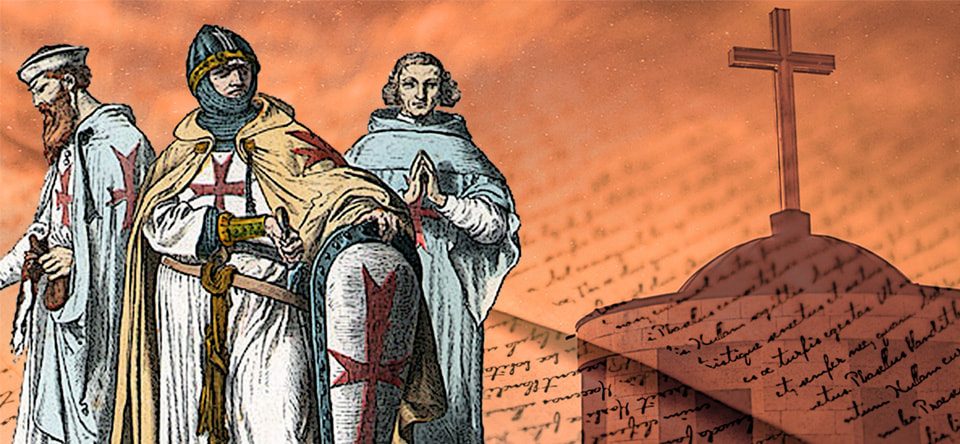
When most of us think of the Knights Templar we either think of the secrets they may have held or the military role they played in the Crusades. Less considered, however, is the iron discipline their Rule demanded they exercise in their day-to-day lives off the battlefield. Today, their fierce commitment to it even in peacetime is both extraordinary and mind-boggling.

PRAYERS, PRAYERS, AND MORE PRAYERS

When the Templars were first officially recognized as an Order in 1129, the “Templar Rule” consisted of 72 rules for them to follow. By the mid-thirteenth century, it had expanded to over 700. The Rule demanded that when not training or at war, these “warrior-monks” were to dedicate their days to work and prayer; a lot of prayer. Like monks of other Orders, they were required to observe the Seven Canonical Hours; times of the day set aside for prayer and devotion.

Their day would have started at 4am with the first of these, Matins (Morning prayer). Later would come Prime (First Hour of the day) and the hearing of Mass at around 6am, Terce (Third Hour) at 9am, Sext (Sixth Hour) at noon, Nones (Ninth Hour) at 3pm, Vespers (Evening prayer) at 6pm,  and Compline (Night prayer) at bedtime. Silence was then to be observed between Compline and Matins and knights were to sleep with a candle lit to avoid the temptations that darkness could bring.

Meals were eaten 2-3 times a day, also in silence. Only the priest who blessed the meal and the clerk who read aloud from the Bible or the Templar Rule were permitted to speak. Templars were also required to eat in pairs both to save on dishes and to ensure that no one fasted without permission. Since it was important that they remained fighting fit, a number of rules in the Templar Rule were designed to prevent them from indulging in too austere a lifestyle. To that end, unlike other monks, they were allowed to eat meat three times a week and occasionally drink diluted wine before Compline.

In between the hours of prayer and meals, Templars were expected to work. Idleness was not permitted. When engaged in business outside the Temple, they were to bring honor to the Order by being models of holiness, above reproach.

COMMUNAL LIFE OF THE TEMPLARS

Their communal lifestyle and rigid hierarchy also meant that nothing was kept private. When a Knight joined the Order he handed over all of his possessions, including his clothing, and was issued new ones. Since the concept of personal property was discouraged, everything was regarded as belonging to the Temple (as opposed to the individual knight). Templars were not even permitted to trade clothing or equipment without permission. This emphasized the importance of the brotherhood over the individual. Any personal items were to be modest and approved by superiors. Nothing was kept secret. Gifts and letters from relatives were no exception and could not be received or sent or without approval.

Similarly, although they promoted cleanliness (both inwardly and outwardly), permission had to be granted before they could take a bath. In truth permission was required for a great many things. Some others included being bled, taking medicine, and/or riding into town.

STRONG MORAL FIBER – AND NO POINTED SHOES!

What’s more, a Templar’s personal conduct was meant to be free of disruptive qualities such as pride, envy, backbiting, or anything that could lead to discord in the community. The vanity that came from trimming beards or growing long hair was also to be avoided, as was the wearing of pointed shoes and shoelaces.

Having also taken the monastic vows of poverty, chastity, and obedience, a Templar was forbidden from kissing any women or even looking at them too much. Even his mother, sisters, and aunts. If he was unfortunate enough to succumb to the temptations of a prostitute, his first priority was to ensure that no one found out. If someone did and there was a public scandal, he would be put out of the Order.

Likewise, sodomy and heresy were punishable by immediate expulsion from the Order. Apparently this policy worked. Unlike the Hospitallers and the Teutonic Knights, the Templars never experienced a public sex scandal or accusations of heresy until Philip IV of France accused them of that and more in 1307; around the same time he realized the Templar wealth would look much better in his own treasury.

Their strength of character also earned them a reputation of honesty and trustworthiness. As the Order expanded at an unprecedented rate, this led to popes, monarchs, families, and individuals, either donated or entrusted their riches to the Templars. As a result, some have compared the Templars as financiers, bankers, and/or investors to modern multinational corporations. The difference, however, was that any profit the Templars made was put toward funding their efforts in the Holy Land.

Individual Templars were not permitted to possess more than 4 dinars, a paltry sum. If they were caught with more, they would be punished. If they were caught with a hoard, they were thrown out.  Of course at higher levels, senior Templar officials were known to engage in political intrigue that would not have been permitted among the rank-and-file. In this regard, the comparison between the Order and a modern multinational corporation is even more on the mark.

A TEMPLAR’S DEDICATION

To live the life of a Templar, one had to embrace these and dozens of other rules provided for in the Rule. Looking back, it makes their dedication to the Order and the Rule both impressive and bizarre to our modern sensibilities. And just before you think they may have only taken it seriously when the boss was around, consider the words of an English Templar named William Watson:

“The Rule is the bones of my body, it runs from my feet to my head, and it is in my arms; these fingers… The Rule is my marrow. Am I not also garbed in the Rule, for it tells me what I wear. The Rule is within me and about me. It is my hand when I fight and tells me what my weapons are. Within and Without.”

Wow.

Sources:

Barber, Malcom. The Trial of the Templars. Cambridge University Press, 1978.
Bernard of Clairvaux: Patron Saint of the Templar Order. www.electricscotland.com/books/ries/BERNARD%20OF%20CLAIRVAUX%20011713.pdf
Frale, Barbara. The Templars: The Secret History Revealed. Translated by Gregory Conti, Arcade Publishing, 2009.
Newman, Sharan. The Real History Behind the Templars. Berkley Books, 2007.
Ralls, Karen. The Templars and the Grail. Quest Books, 2003.
Wojtowicz, Robert T. Trans. The Original Rule of the Knights Templar. Western Michigan University, 1991, scholarworks.wmich.edu/cgi/viewcontent.cgi?article=2029&context=masters_theses.

0 Comments


Leave a Reply.

    Archives

    April 2020
    March 2020
    February 2020
    November 2019
    October 2019
    September 2019

    Categories

    All
    Ancient
    Bronze Age
    Faerie
    Leadership
    Lost Civilizations
    Medieval
    Minoan
    Modern
    Mysterious
    Roman

    RSS Feed

Proudly powered by Weebly
  • Home
  • Articles
    • Blog
  • Videos
    • Documentaries
    • The Dark Side
    • Other Stuff
  • Other works
  • About TAH
  • Store
  • Contact